
MOWMT 19: Origin Stories for Beloved Objects with Nancy Churnin


Children have a natural curiosity about the world. How and why were Band-Aids invented? Who created the giant balloons for Macy’s Thanksgiving Day Parade? How did Winnie the Pooh and Teddy Bears get their names?
In looking for mentor texts about inventions and creations, you will find two distinct tracks: books about the lives of the inventors which culminate in the invention or books about the invention that only include enough of the inventor’s life to explain how and why that creation happened. When I was researching my book on how the teddy bear came to be, I soon realized that the mentor texts I needed would focus on the how and why of the creation of the object.

The Boo-Boos That Changed the World: A True Story About an Accidental Invention (Really!), published in 2018 by Charlesbridge, focuses on Earle Dickson, a 1920s cotton buyer with an accident-prone wife named Josephine. Written by Barry Wittenstein and illustrated by Chris Hsu, the book is neither the story of Earle’s nor Josephine’s life, but the story of what inspired Earle to invent the Band-Aid – to help his wife, whom he loved dearly.
The book sports a folksy, conversational and, at times, humorous narrative style established on the very first page where the narrator writes of the couple’ marriage, “THE END,” only for the story to continue as we learn about Josephine’s constant accidents in the kitchen.
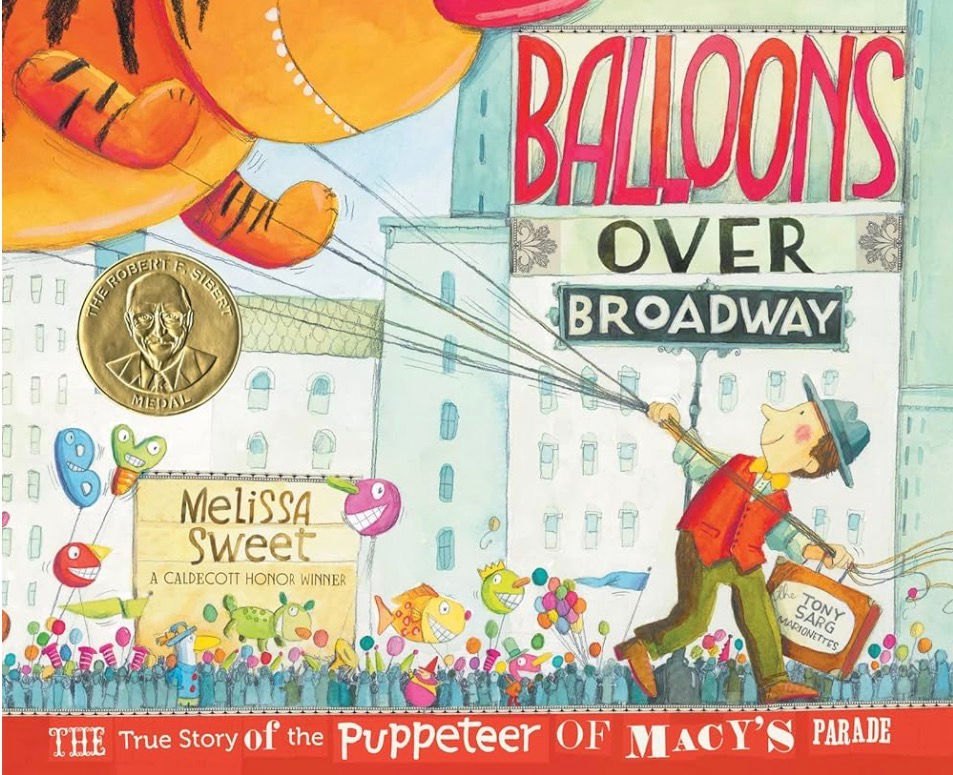
Balloons Over Broadway: The True Story of the Puppeteer of Macy’s Parade, a Caldecott Honor recipient, written and illustrated by Melissa Sweet (Clarion Books, 2011), offers a little more biography in a story of Tony Sarg, the puppeteer who created the giant balloons for the Macy's Thanksgiving Day Parade. Even so, the early, playful pages about his childhood focus tightly on his love of inventing ways to make things move, which led to his creation of puppets. Sweet delights in the problem-solving aspect of creating the balloons for the parade – showing how complicated it was to come up with a way to make giant balloons that could be manipulated in a way that would delight children. Like Dickson in The Boo-Boos That Changed the World, Sarg tries different approaches before he succeeds.
I had already written three books about the creation of objects when I was researching my book about the creation of the teddy bear.

The Queen and the First Christmas Tree, Queen Charlotte’s Gift to England (illustrated by Luisa Uribe for Albert Whitman in 2018) focused on Queen Charlotte’s introduction of the Christmas tree to England in 1800, but that was more of a biography than I felt would be right for the teddy bear book.
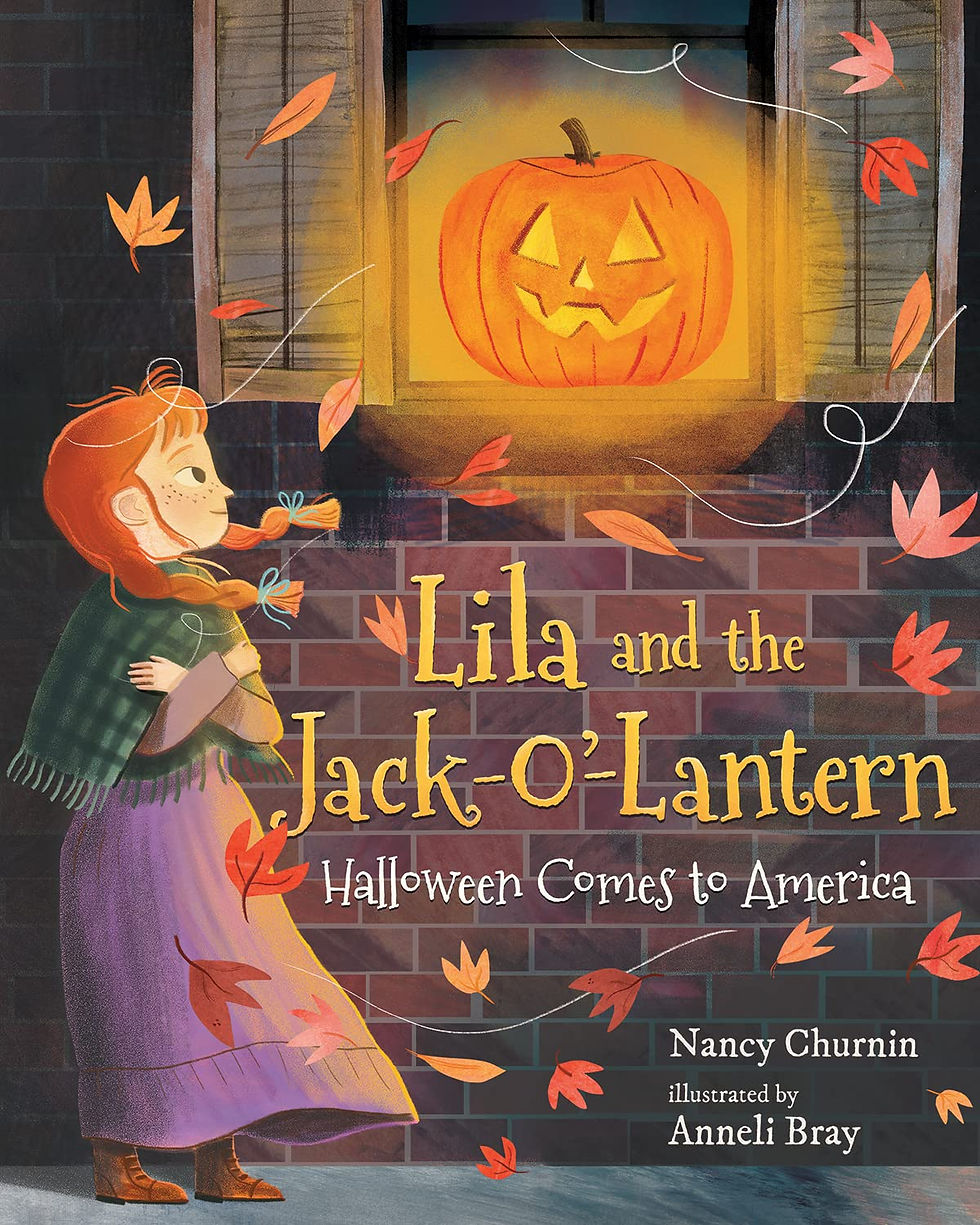
Lila and the Jack-o’-Lantern, Halloween Comes to America (illustrated by Anneli Bray for Albert Whitman in 2023), about the Irish immigrants who brought their Halloween customs to America in the 19th century, was more tightly focused on the invention, but it was historical fiction – and I needed mentor texts for non-fiction.

Valentines for All, Esther Howland Captures America’s Heart, (illustrated by Monika Roza Wisniewskay for Albert Whitman in 2023), was closer to the mark, but still more of a biography of the first commercial creator of Valentine cards in America, Esther Howland, than I was looking for in the teddy bear book.

While I would learn valuable lessons from the other mentor texts in this post, the perfect mentor text, it turned out, was another book about a toy bear, Finding Winnie: The True Story of the World’s Most Famous Bear, a 2016 Caldecott Medal-winner written by Lindsay Mattick and illustrated by Sophie Blackall, published in 2015 for Little, Brown Books for Young Readers.
Finding Winnie was non-fiction but made accessible for kids by a narrative device where the author tells the story of the bear to her son. In real life, Mattick’s great-grandfather, Harry Colebourn, a veterinarian, saves a bear cub by buying it from a trapper on his way to fight in World War I, named it Winnie after his own native Winnipeg, and ultimately donates it to the London Zoo. That’s where author A.A. Milne’s son, Christopher Robin, falls in love with the bear and renames his own toy bear Winnie in her honor (yes, the original Winnie was a female bear, while Christopher Robin considered his bear to be male).
While the other mentor texts took a lighter approach to their narratives, I found myself drawn to the deeply emotional approach of Finding Winnie and how it does not shy away from difficult topics, including war. It seemed the perfect inspiration for A Teddy Bear for Emily which deals with the challenges of the immigrant refugee experience.

When I wrote A Teddy Bear for Emily – and President Roosevelt, Too, illustrated by Bethany Stancliffe for Albert Whitman in 2025, I mirrored the focus of the creation of the Band-aid in The Boo-Boos That Changed the World, by focusing tightly on the creation of the teddy bear on the first page as the Mama of nine-year-old Emily (who was really nine years old when this gets “that look in her eyes” before gathering her materials.
As with Balloons Over Broadway, I let readers see the details of the creation of the teddy bear with Emily helping Mama with the sewing and the stuffing and attaching the button eyes.
The immediate catalyst for Emily’s mother creating what she at first called “Teddy’s Bear” was a newspaper article about how President Theodore “Teddy” Roosevelt saved a young bear on a hunting trip. But to help young readers understand the deeper meaning of why this act of kindness was so personal to Emily’s mother and father, I used the story within a story technique I studied in Finding Winnie. In A Teddy Bear for Emily, I had Emily’s mother explain the family’s immigration story to Emily, specifically how her father, Morris Michtom, was a Jewish refugee from Russia, coming to America, looking for kindness.
He had saved up his money and learned English to open up a candy shop where he also spread kindness by selling hand-sewn toys to children. The president’s kindness to the vulnerable bear resonated in the heart of the Michtom family because it reminded them of how President Roosevelt had always been a champion for vulnerable immigrants like them, too.
A Teddy Bear for Emily was not my family story in the same direct way that Finding Winnie was for Lindsay Mattick, but it was very personal to me because my grandparents had also come to America seeking refuge, with my mother’s parents fleeing persecution from Russia in the same way that the Michtoms had. I dedicated my book to all my immigrant grandparents, including the immigrant grandparents of my cousins who had also fled persecution and sprinkled Yiddish throughout the text (with the help of my friend, Yiddish scholar Miriam Udel) to honor their native language.
I am very honored to have been asked to present A Teddy Bear for Emily – and President Roosevelt, Too for the new Theodore Roosevelt Presidential Library on May 11: https://www.trlibrary.com/events/book-churnin It makes me happy that just as President Roosevelt responded with kindness so many years ago when the Michtoms asked if they could name their bears in his honor, that those who are honoring his legacy through this new library, opening July 4 in Medora, North Dakota, are welcoming this picture book about his kindness to immigrants.
Nancy Churnin is offering two prizes, an autographed copy of A Teddy Bear for Emily – and President Roosevelt, Too and a 30-minute AMA.

Nancy Churnin is an award-winning author who writes children's books about people (and
animals!) who have made a positive difference in the world. Her books have won the National Jewish Book Award, South Asia Book Award, Sydney Taylor Honor and Notables, Grinspoon Jewish Story Award and been picked for Junior Library Guild, Silver Eurekas, National Council for the Social Studies Trade Book Notables, Bank Street College of Education Best Books, A Mighty girl, and multiple state lists, including the Texas 2X2 and California Reads, and have received starred reviews. A former journalist and proud daughter of a retired teacher, Nancy loves visiting schools and encouraging kids to follow the dreams that can make them heroes of their own stories. Find her, along with resources, teachers guide and projects on www.nancychurnin.com

Social Media:
On Facebook: Nancy Churnin
On Facebook: Nancy Churnin Children’s Books
On Instagram: @nchurnin
On LinkedIn: Nancy Churnin
BONUS ENTRIES: NOTE: As you comment on each post, please note whether you have shared this post, bought the author's book for yourself or as a gift, whether you have followed our guest blogger or Rate Your Story on social media (and where), as well as whether you have left a review of the guest blogger's book (and where) for extra entries (for each show of support) and to be eligible for surprise prizes.
Feel free to click the links to buy the books mentioned and help support our Weekly Mentor Text Talks (OPEN TO ALL - Replays available to Rate Your Story Members only)! Thanks for sharing the #BookLove #MarchOn #MentorTexts #RateYourStory


I like how you've taken such an interesting niche and approached it from different angles in your own writing. Great mentor texts. Thank you, Nancy.
Thank you for sharing wonderful examples of NF PB biographies that approach the subject in different ways. I love how you incorporated some elements from several to find the path you were looking for when writing A Bear for Emily and President Roosevelt, Too.
I follow you on IG and shared this post on X.
Thanks for sharing those books and also for sharing your thinking as you chose which books to use as mentors.
Great post, Nancy! I'm a fan of your books and look forward to reading A Teddy Bear for Emily. I always love the "backstory" so you have peaked my interest in writing this kind of story. Thank you for sharing wonderful mentor texts. I especially want to read about the story about the puppeteer for the Macy's floats. I always wondered about those. My uncle worked for Macy's when I was a kid. My sister and I got to participate in the parade for 3 years. I follow you on FB, IG, X and Bluesky. I shared your post on Bluesky.
Thank you for your insights, Nancy!