
MOWMT 25: Finding Voice in NF with Lydia Lukidis


Finding the Right Voice & Tone in Nonfiction Picture Books
By Lydia Lukidis
Writing compelling nonfiction for children isn’t just about sharing facts, it’s about sparking curiosity and making learning fun. In picture books, where every word counts and illustrations carry part of the story, the way your text sounds can make the difference between a forgettable read and a book kids (and adults) love to revisit.
Voice vs Tone
Let’s start with an important distinction: in kidlit, voice is who is speaking on the page, while tone is how they’re speaking.
Voice is consistent and rooted in the author’s or narrator’s personality. It’s the recognizable style that makes a book feel like your book. Whether it’s curious, playful, warm, or authoritative, voice stays steady from beginning to end.
Tone, on the other hand, can shift depending on the subject or moment. In a nonfiction picture book, the tone might be excited when introducing an amazing fact, gentle when discussing a sensitive topic, or dramatic when building suspense around a discovery. Tone responds to the content, while voice anchors the reader.
Think of it this way: voice is the storyteller; tone is their mood. In great nonfiction picture books, a strong voice paired with a well-matched tone helps facts feel engaging, accessible, and emotionally resonant for young readers.

For my book DEEP, DEEP DOWN, I had settled the voice from the very beginning. The tone only revealed itself later through revision.
The voice is lyrical, poetic, flowing, and rhythmic all the way through. I was struck with how mesmerising the Mariana Trench creatures are, so I wanted the voice to mimic that sense of wonder. In addition, the voice is deliberately invitational and in the second person, although I don’t say “you,” I talk in the second person, like this:
To find out,
squeeze inside the submersible and
plunge,
plunge,
plunge.
This voice is consistent throughout the manuscript.
The tone is the emotional atmosphere the voice creates. In DEEP, DEEP DOWN, it’s awe-filled, tender, reflective, and quietly joyful. The tone shifts slightly as the book moves backward (intimate → vast), but it never becomes loud, scary, or chaotic. It stays emotionally safe and expansive.
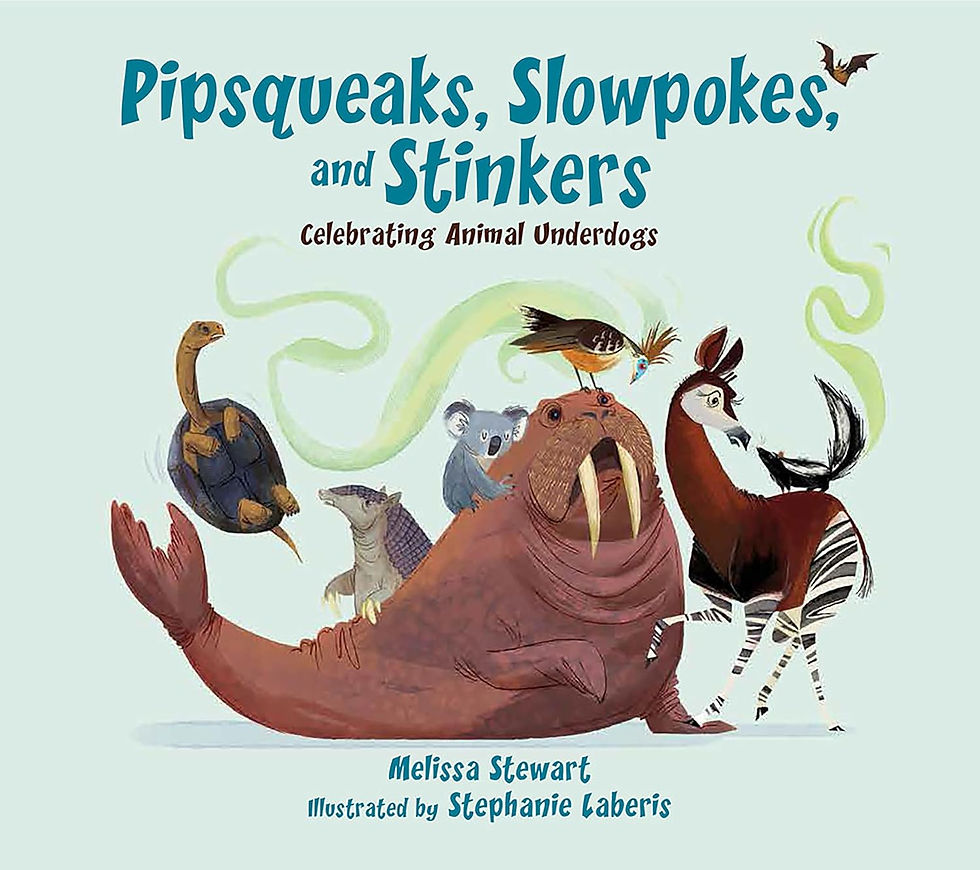
The book’s voice is conversational and engaging, speaking directly to the reader with lines like, “Don’t you think it’s time someone paid attention to them?” It’s humorous and peppy, lively and fun, using playful language around “pipsqueaks, slowpokes, and stinkers.” The text feels friendly and accessible, more like a speaker chatting with kids than a traditional, data-heavy nonfiction book. Overall, the voice is casual, lively, and conversational, making science approachable and entertaining.
The tone is playful and upbeat, inviting smiles with language that highlights quirky animals in a positive way. It’s encouraging and supportive, subtly linking the animal science to real-world lessons, like how underdogs can have unique strengths. Curious and lighthearted, the book shares facts in an exploratory, conversational way rather than a straight lecture. The bright, humorous, and scientifically accurate illustrations complement the playful text, enhancing the book’s friendly and engaging feel.

This book is technically informational fiction but it’s a great example. The voice is character-driven and humorous, narrated by a grumpy cactus full of personality. It’s conversational and direct, speaking to the reader like a cranky guide sharing insider information. While it delivers accurate science facts, the narrator’s playful attitude is always front and center, making the informational content feel lively and entertaining. Overall, the voice is funny, character-narrated nonfiction that brings personality to science.
The tone is playful and witty, with the cactus often appearing amused by its own crankiness. It’s lighthearted and entertaining, ensuring that even scientific topics feel fun rather than serious. Engaging for kids, the tone encourages laughter and curiosity, making pollination and plant colors exciting and alive. Overall, the tone is cheeky, upbeat, and inviting, perfectly complementing the narrator’s personality.
Some Tips
You may not know what voice and tone may be appropriate for your story in the beginning. That’s part of the process. Remember to read widely, paying attention to how different nonfiction texts establish a speaker and create engagement. And don’t be afraid to experiment and try writing the same fact in multiple voices to see which feels most natural. It’s during this experimenting where the magic often unfolds!
Prize: AMA 20-minute Zoom call

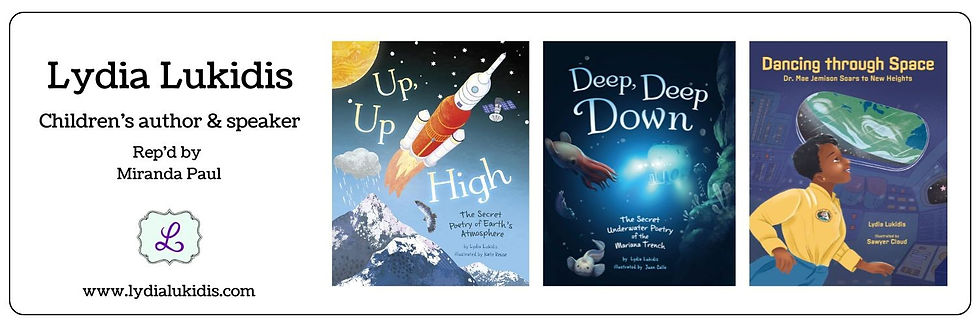
BIO: Lydia Lukidis is an award-winning author of 60+ trade and educational books for children. A science enthusiast from a young age, Lydia now incorporates her studies in science and her everlasting curiosity into her books. Her titles include UP, UP HIGH: The Secret Poetry of Earth's Atmosphere (Capstone, 2025), DANCING THROUGH SPACE: Dr. Mae Jemison Soars to New Heights (Albert Whitman, 2024), and DEEP, DEEP, DOWN: The Secret Underwater Poetry of the Mariana Trench (Capstone, 2023). She also continues writing fiction and humorous books, like her debut graphic novel series, GROUCHO THE GROUCHY GROUNDHOG (Andrews McMeel, 2025/6). She won numerous awards such as the Crystal Kite Award for the Canada and North America division, a Forest of Reading Silver Birch Express Honor, and multiple Cybils Award nominations.
Lydia is very involved in the kidlit community. Another passion of hers is fostering a love for children’s literacy through the writing workshops she regularly offers in elementary schools across Quebec with the Culture in the Schools program. Lydia is represented by literary agent Miranda Paul from Aevitas Creative Management.
Social media links
Website: http://www.lydialukidis.com/
Twitter: https://twitter.com/LydiaLukidis
Insta: @lydialukidis7
BONUS ENTRIES: NOTE: As you comment on each post, please note whether you have shared this post, bought the author's book for yourself or as a gift, whether you have followed our guest blogger or Rate Your Story on social media (and where), as well as whether you have left a review of the guest blogger's book (and where) for extra entries (for each show of support) and to be eligible for surprise prizes.
Feel free to click the links to buy the books mentioned and help support our Weekly Mentor Text Talks (OPEN TO ALL - Replays available to Rate Your Story Members only)! Thanks for sharing the #BookLove #MarchOn #MentorTexts #RateYourStory




Super helpful definitions and comparison of voice and tone. Thank you, Lydia!
Thank you for this Lydia. I'm going to watch for "a strong voice paired with a well-matched tone". These books are a great place to start.
Thank you for sharing your thoughts and mentor texts that are examples of voice and tone. I want to study the mentor texts, including your wonderful Deep, Deep, Down!
Voice and tone can be so hard to distinguish. Thanks for this explanation.
Great post, Lydia! Thank you for clarifying voice vs. tone in stories and sharing the mentor text examples. I'm very interested in graphic novels so I'm looking forward to checking out Groucho The Grouchy Groundhog. I follow you on Insta, X, FB and subscribe to your blog. I shared your post on Bluesky.